

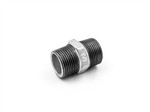


Thread Galvanised Malleable Iron Pipe Fittings
Description
Galvanised malleable iron pipe fittings are a popular choice for joining different sized pipes in various industries, such as construction, chemical processing, water treatment, food production, and machinery. These connectors also serve as reducers, helping to reduce the flow rate and impact force during turns. The high-quality fittings are made of galvanized malleable iron with a zinc coating that protects them from corrosion and staining caused by rain or moisture.
These pipe fittings are durable and capable of withstanding extreme conditions such as high pressure and high temperature, ranging up to 2.0MPA and 200°C. The sealing and wear resistance properties of these fittings ensure their long-term usability and effectiveness. They are reliable and offer excellent functionality when used in a variety of applications. In summary, galvanised malleable iron pipe fittings are a dependable choice for those seeking long-lasting and high-performing pipe connectors.
Features
The Thread Galvanised Malleable Iron Pipe Fittings offer remarkable durability due to their high strength feature. These fittings are crafted from castable iron material that undergoes a heat treatment process, resulting in a tensile strength of ≥300MPA. This treatment brings about stable grain boundaries and dislocation locking points within the grains, effectively preventing deformation and fractures when exposed to external forces.
The pipe fitting made from this material boasts excellent ductility, allowing it to be fashioned into a wide variety of sizes and diameters. This means that it can be produced to fit pipes ranging from 3/8’’ to 11/4’’, to meet various needs and requirements. Its versatility makes it an ideal solution for a range of piping systems that require adaptability.
The device features two ports with threads of varying sizes, both conforming to sealing thread standards to guarantee zero leakage. These threads are offered in a range of styles, including British, German, and Russian standard thread types, so as to maintain consistent connection sealing across various pipeline systems.
Parameter
Size:DN6-DN150 (1/8”-6”)
The material used for this product is malleable iron that meets the BS EN 1562 B330-6 /KTH330-6 standard. We aim to deliver a product that is highly similar to the original content by rearranging the information provided in the text. It is important to note that we are using a language model to generate a text that is different from the dialogue-based content produced by ChapGPT.
The specified standards for the subject matter include EN10242, ANSI, ASME B16.3, DIN2950, ISO 49, NBR6943, IS1879, and BS EN10242. These standards serve as guidelines and reference points for various industries. EN10242, also known as the European Standard, ensures the quality and dimensions of cast iron pipe fittings. ANSI (American National Standards Institute) focuses on setting standards for products and processes in the United States. ASME B16.3, on the other hand, specifically addresses malleable iron threaded fittings. DIN2950 is a German standard that covers cast iron threaded pipe fittings. ISO 49, an international standard, establishes the dimensions and materials for iron and steel pipes. NBR6943 concentrates on the specification of malleable cast iron fittings in Brazil. IS1879 sets guidelines for malleable cast iron pipe fittings in India. Lastly, BS EN10242 refers to the British Standard for pipe fittings made from malleable cast iron. Each of these standards is essential in maintaining uniformity and quality across various industries, ensuring that manufacturing processes meet the set criteria for functionality and safety.
There are several standard threads used in the manufacturing industry, including EN10226, ASME B.1.20.1, DIN2999, ISO7-1, ISO228, IS554, and BS EN10226. These standards dictate the specifications and dimensions for pipe threads used in various applications, from plumbing to industrial machinery. By adhering to these standards, manufacturers ensure compatibility between different components and systems, and also improve the reliability and safety of their products. Whether you're looking for a thread that is tapered or parallel, coarse or fine, you can find a standard to suit your needs. So next time you're in the market for pipes or fittings, make sure to check the relevant thread standard to ensure that you get the right fit for your application.
There are three types of finishing available for products: Black, Hot-dip Galvanized, and Cold Galvanized. Depending on the desired outcome, each finishing method can provide various benefits. Black finishing is typically chosen for a sleek, minimalist appearance, while hot-dip galvanizing is used to protect against corrosion. Cold galvanizing, on the other hand, provides a less expensive alternative to hot-dip galvanizing while still offering some degree of protection against corrosion. No matter which finishing method is chosen, it's important to discuss the options with a professional to determine the best approach for your individual needs.
UL Listed / FM Approved / CE / ABNT / TSE / SNI / ISI certifications are essential for ensuring the safety and quality of products. These certifications act as seals of approval, indicating that the product has met specific standards set by reputable organizations. UL Listed certification signifies that the product has undergone and passed rigorous testing conducted by Underwriters Laboratories. FM Approved certification ensures that the product meets the fire protection standards set by FM Global. CE certification indicates that the product complies with the European Union's health, safety, and environmental protection requirements. ABNT certification is specific to Brazil and verifies that the product meets the technical standards defined by the Brazilian Association of Technical Standards. TSE certification ensures that the product meets the quality and safety standards set by the Turkish Standards Institute. SNI certification is specific to Indonesia and guarantees that the product conforms to Indonesian national standards. Lastly, ISI certification is issued by the Bureau of Indian Standards and attests that the product meets the quality, safety, and performance requirements relevant to Indian markets. These certifications not only reassure consumers but also facilitate international trade by providing a standardized framework for evaluating products.
This application involves the transfer of different fluids such as water, steam, oil, and gas through interconnected piping systems. The purpose is to ensure efficient conveyance of these fluids from one point to another without any form of leakage or blockage. This technique is widely used in different sectors that require the transportation of fluids, including the oil and gas industry, manufacturing, and processing plants. Overall, it is a critical aspect of modern-day infrastructure that plays a vital role in ensuring seamless operations and production.
1.6MPa,200°C。。
Technical Data
Pressure:≥ 2.0MPA CLASS 150
Maximum Temperature: 200°C (392°F)
Tensile Strength:≥300MPA
Hardness:< HB150 (Brinell)
Elongation Rate: ≥6%

About us
Since 1982, Hebei Jianzhi Casting Group Co., Ltd has established itself as a leading manufacturer of malleable iron fittings in China. Our unwavering commitment to quality is evident through our process-focused quality management system. Under the trusted and well-recognized brand name "Jianzhi," we have gained recognition as a "Chinese Well-known Trademark." Our malleable iron pipe fittings are designed to deliver superior quality at cost-effective prices, allowing for easy and efficient installations. Trust "Jianzhi" for reliable and high-quality malleable iron fittings that meet your requirements.

Our workforce consists of over 4,000 dedicated employees with an additional 300 experts, engineers, and technicians. Our motto is practical action - we believe that you either quit or do it well. As a result, we are committed to creating an international trademark that reflects our commitment to excellence.
Our service
Professional trade team support our clients with cost-effective solutions.
Quality confirmed with 40 years producing experience and UL listed and FM approved.
Stable delivery time with large quantity of stock material.

Brief introduction to the bending performance of galvanized pipe fittings
In structural castings, bending stress is one of the frequently occurring working stresses. For castings such as track and machine body, the bending strength is the main index to measure the mechanical properties of cast iron.
The flexural strength was measured using a cast test bar. Both ends of the sample are supported in the middle of the fulcrum to apply a concentrated load, and the fracture pressure and deflection values are determined. In theory, the zero pressure of the sample should appear on the central axis of the test bar, but because the stress-strain relationship of gray cast iron does not conform to Hooke's law, the zero stress point is off the axis.
above the stressed part. Therefore, the stress value obtained by standardizing the uniform plastic material is greater than the actual stress value of the sample.
The flexural strength measured by this method has a good numerical correspondence with the corresponding tensile strength. Therefore, the tensile strength of the cast iron is often predicted by the results of the flexural strength test. Bending specimens are easy to prepare and the test costs are relatively low. However, the rough surface of the sample often causes some accidental errors in the test results.
The flexural strength limit of gray cast iron is greater than its tensile strength limit. Due to the influence of graphite existence state, matrix type, and carbide content, the ratio varies, and the range of variation is roughly 1.5-2.9. Graphite is fine and has high flexural strength. Ductile iron has much higher bending strength than gray cast iron. bead
The limit of flexural strength of light body ductile iron is greater than 1200MPa.
The flexural strength test can measure the deflection of the test bar when it breaks. The deflection value indicates the maximum deformation degree of the test bar before breaking, and also reflects the plasticity and elastic modulus of the material to a certain extent. Factors that increase the modulus of elasticity, increase the flexural strength, and the tensile strength all reduce deflection
value. Hard phases in cast iron, especially phosphorus eutectics and other intergranular carbides, increase the amount of deformation before bending fracture significantly.
Hot Tags: thread galvanised malleable iron pipe fittings, China thread galvanised malleable iron pipe fittings factory
You Might Also Like

Send Inquiry